Detailed Guide On Earbuds, Explore, Choose and Buy
26th February, 2026
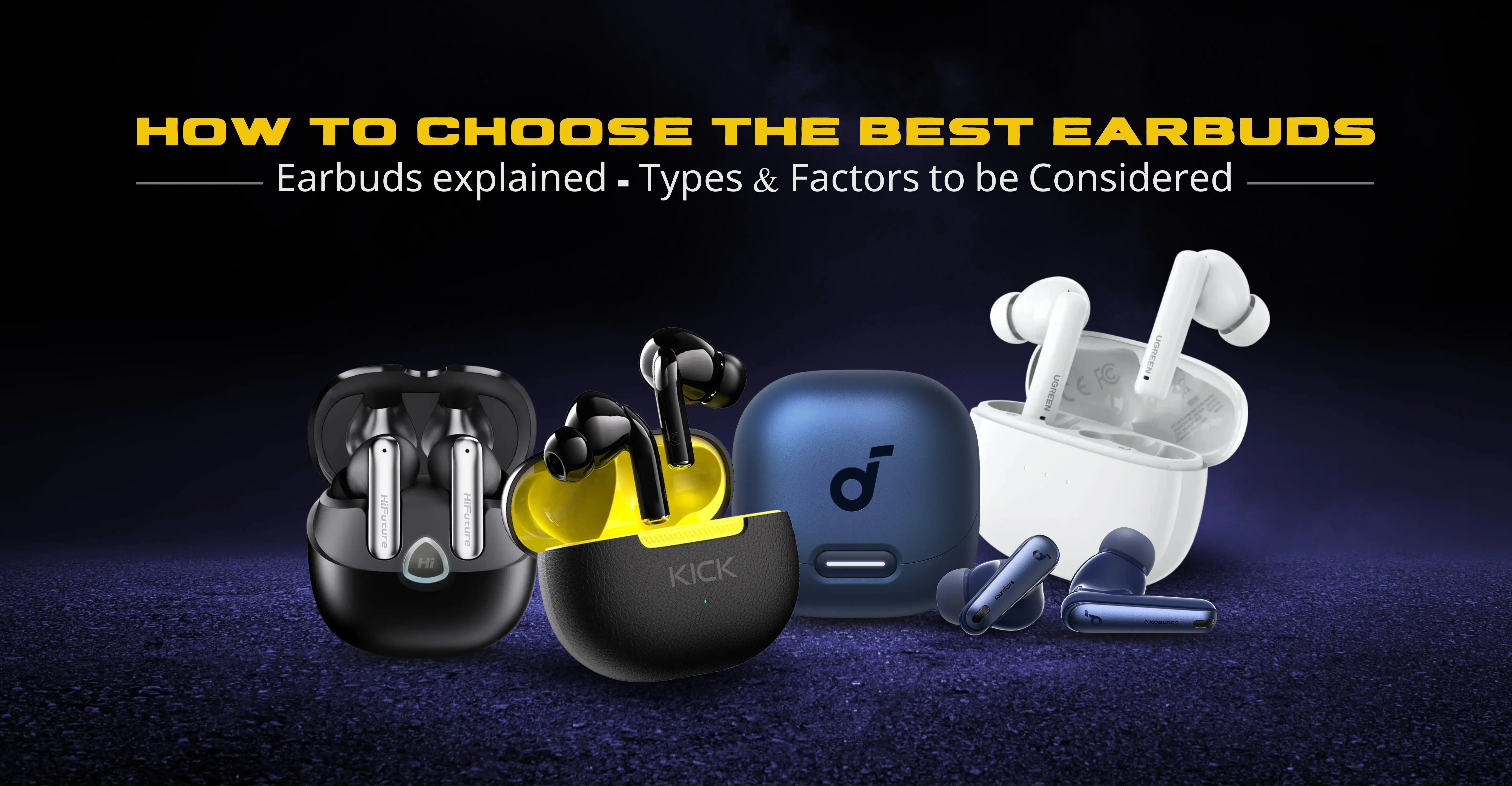
Earbuds have become a staple in our daily lives, offering a combination of convenience, portability, and quality sound. Whether you're a casual listener, a fitness enthusiast, or an audiophile, finding the right pair of earbuds is crucial for an optimal experience. In this article, we’ll explore the different types of earbuds available and help you choose the best ones based on your needs and preferences.
What are Earbuds?
Earbuds are small, portable listening devices that fit directly in or around the ear, providing a compact and convenient way to listen to music, take calls, or enjoy audio content without the bulk of traditional over-ear headphones. They come in various designs, including wired and wireless models, and are often used by people on the go due to their lightweight nature. Many earbuds are designed with ergonomic features to ensure a comfortable fit and are often equipped with added functionalities like noise cancellation, sweat resistance, or touch controls. Whether you're commuting, exercising, or just relaxing, earbuds offer an easy and unobtrusive way to enjoy audio with minimal hassle.
How Earbuds Work?
Earbuds convert electrical audio signals into sound waves using tiny speakers (drivers) that vibrate to produce the music you hear. Here is the full process:
A. Signal Transmission: Signal transmission refers to how audio is sent from a device to earbuds.
In wired earbuds, the audio signal travels through a cable directly from the device to the earbud drivers.
In wired earbuds Audio signals travel through a cable from the device to the earbuds. But in wireless Earbuds Audio signals are transmitted via Bluetooth to the earbuds.
B. Driver Mechanism: Each earbud contains a small speaker called a driver, which converts electrical signals into sound using a diaphragm, magnet, and coil.
C. Amplification: The device or earbuds amplify the weak electrical signal to produce audible volume.
D. Fit and Sound Isolation: Earbud design directs sound into your ears and may block external noise; some earbuds also have noise cancellation features.
E. Power (Wireless Earbuds): Wireless earbuds use rechargeable batteries that are charged via a case.
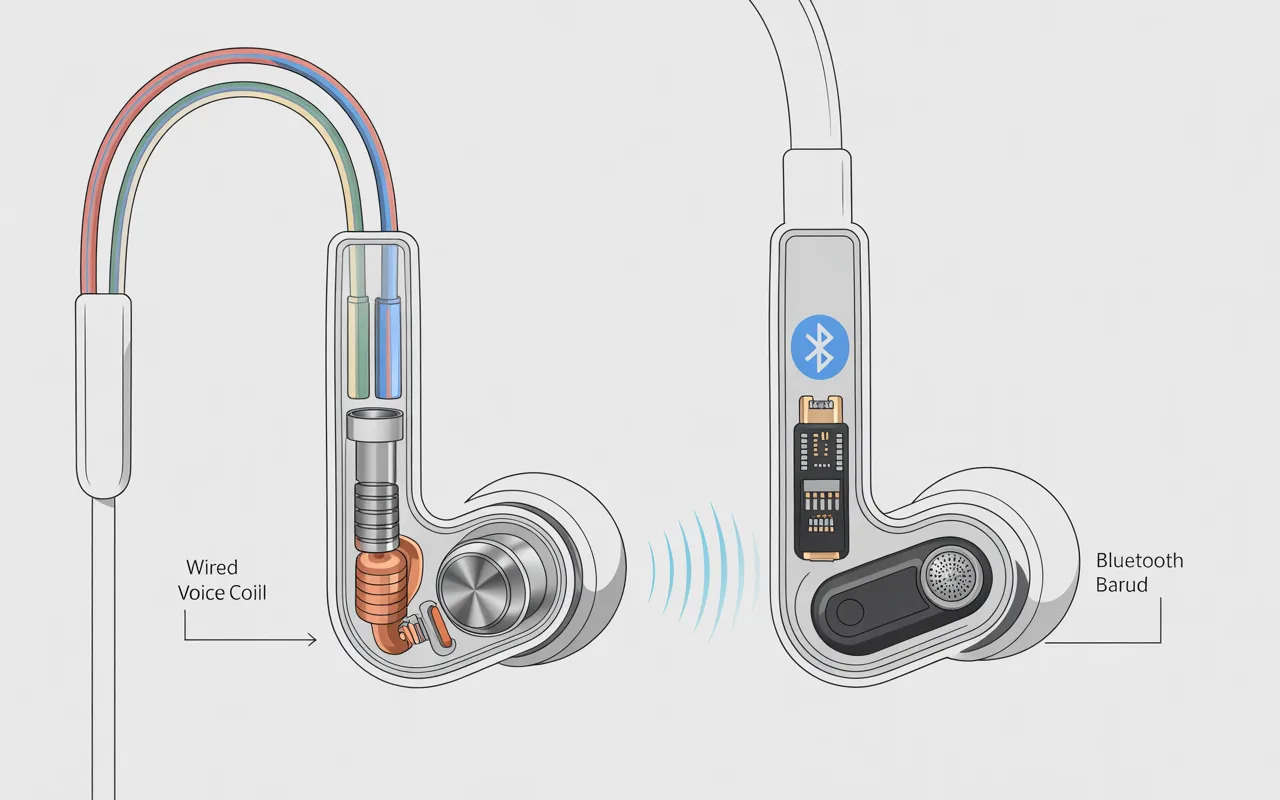
In summary, earbuds take audio signals from a device and convert them into sound directly in your ears. Wired earbuds transmit through cables, while wireless ones use Bluetooth. The driver inside vibrates to create sound waves, the signal is amplified, and the design helps improve sound quality and comfort. Wireless earbuds rely on rechargeable batteries, often charged via a case, making them convenient for everyday use.
ANC vs ENC in Earbuds
Types of Earbuds
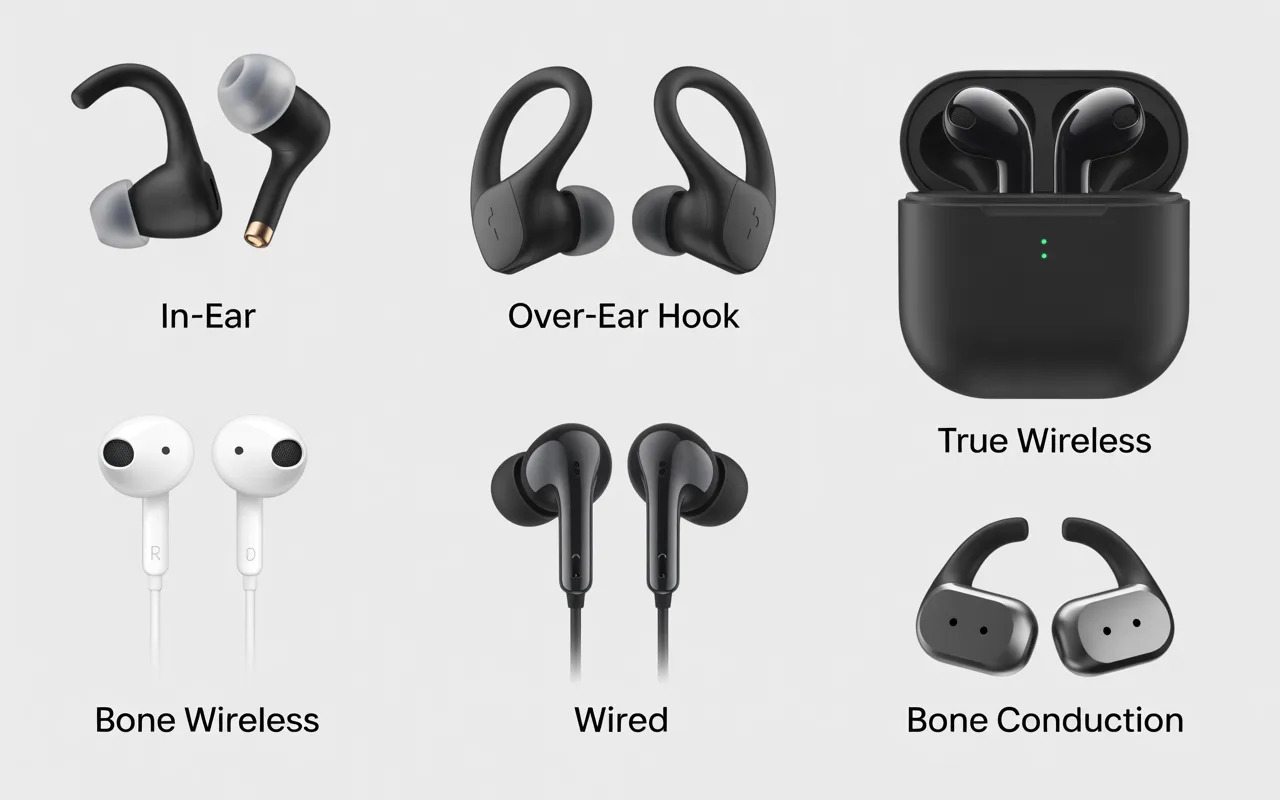
1. Wired Earbuds: Connect via cable; reliable, affordable, and often have excellent sound, but wires can tangle.
2. Wireless Earbuds: Connect via Bluetooth; convenient and portable, but require charging and may have occasional signal issues.
3. True Wireless Earbuds (TWS): Completely wire-free, including between earbuds; come with a charging case and offer maximum mobility.
4. Noise-Canceling Earbuds: Reduce or eliminate ambient noise using passive isolation or active noise cancellation; ideal for travel or noisy environments.
5. Sports Earbuds: Designed for active use; sweat- and water-resistant, ergonomic, sometimes include fitness tracking features.
6. Gaming Earbuds: Optimized for gaming with low latency, clear sound, enhanced bass, and built-in microphones; some support surround sound.
7. Audiophile Earbuds: High-quality sound for enthusiasts; crafted for clarity, balance, and premium listening experiences.
8. Bone Conduction Earbuds: Transmit sound via skull vibrations rather than the eardrum; allow awareness of surroundings while listening
How to Choose the Best Earbuds for You
Choosing the best earbuds comes down to understanding your specific needs and preferences. Here are some factors to consider when making your choice:
A. Sound Quality: For casual listeners, standard earbuds may suffice, but if you care about bass, treble, and overall clarity, consider high-quality wired or wireless earbuds. Audiophile-grade earbuds are ideal for those who want the best audio experience.
B. Comfort and Fit: Look for adjustable or customizable ear tips for the perfect fit, especially if using earbuds for long periods. Sports earbuds are ergonomically designed to stay in place during movement.
C. Battery Life: For wireless or true wireless earbuds, check how long they last on a single charge. Some last 3-4 hours, others 12+ hours. Charging cases may provide multiple additional charges.
D. Noise Isolation or Cancellation: Noise-canceling or noise-isolating earbuds help in noisy environments. Active noise cancellation blocks background sounds, while passive isolation or open-ear designs let you hear your surroundings.
E. Water Resistance: Important for sports or workouts. Look for an IP rating (e.g., IPX7) to protect earbuds from sweat, rain, or brief submersion.
F. Connectivity: Wired earbuds need a compatible jack or adapter. Wireless models should support Bluetooth, and some may offer NFC pairing or multipoint connectivity for multiple devices.
G. Price: Earbuds range from $10 to $300+. Set a budget and find a balance of sound quality, comfort, and features. Often, higher-priced models offer better durability and performance.
H. Brand and Reviews: Established brands like Sony, Bose, Sennheiser, Apple, and Beats often deliver quality. User reviews provide insight into real-world performance.
Best Earbuds for 2026 (Editor Picks)
As we move into 2026, the earbuds market continues to evolve with innovative designs and cutting-edge technology. From superior sound quality to advanced features like adaptive noise cancellation and ultra-long battery life, these top picks are designed to meet the needs of every type of listener.
Conclusion
When selecting earbuds, it’s important to weigh factors such as sound quality, comfort, battery life, and features like noise cancellation or water resistance. Whether you’re looking for the best noise-canceling earbuds for travel or high-performance sports earbuds, the right pair will enhance your listening experience. Take the time to assess your needs, set a budget, and explore the different types to find the earbuds that best suit your lifestyle.
FAQs
Q: Are earbuds bad for your ears?
A: Not if used responsibly. Avoid high volumes for long periods and take breaks.
Q: Can earbuds cause ear infections or pain?
A: Yes, if shared or not cleaned. Ensure proper fit and hygiene.
Q: Are earbuds safe to use?
A: Generally safe when used at moderate volume, with breaks, and proper fit.
Q: How do earbuds work and connect to devices?
A: They convert electrical signals into sound. Wired via cable/port; wireless via Bluetooth.
Q: Can earbuds cause headaches or vertigo?
A: Sometimes, if volume is too high or fit is poor. Adjust volume, fit, and take breaks.
Q: Which earbuds are best for sound quality and noise cancellation?
A: High-end wired or wireless models from brands like Sony, Bose, Sennheiser, Apple, and Beats.
Related Blogs

iPhone Duo in Nepal 2026: 12GB RAM, Storage, Features & Availability
18th September, 2026
Best Maono Microphones in Nepal for YouTube, Podcasting & Gaming
8th September, 2026
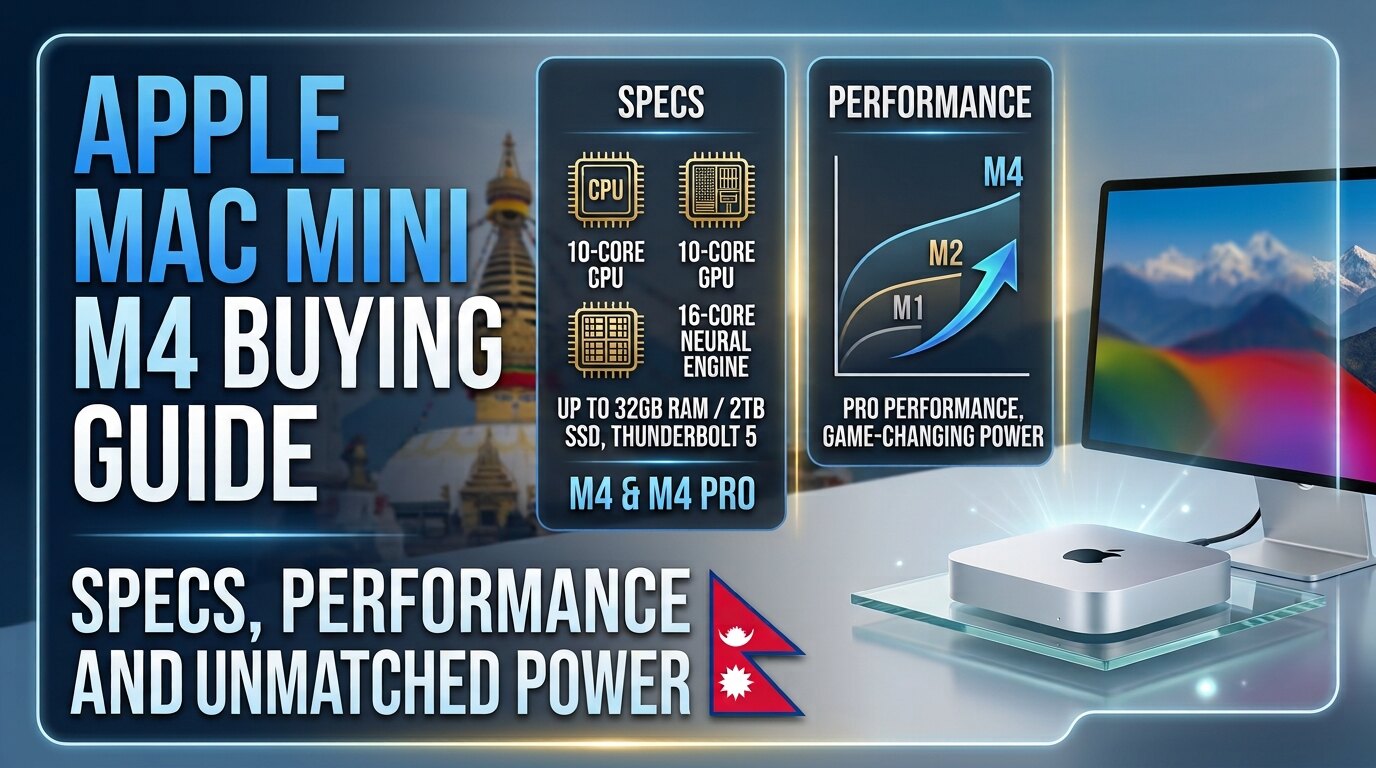
Apple Mac Mini M4 Buying Guide: Specs, Performance and Price in Nepal
21st August, 2026

Samsung Galaxy Z Fold8 Ultra, Z Fold8 & Z Flip8: Specifications, Features and Complete Comparison 2026
24th July, 2026

Gaming Laptop Price in Nepal (2026): Complete Detailed Guide, Latest Prices, Specs & Buying Advice
30th June, 2026

NVIDIA RTX Spark Full Specifications
15th June, 2026
Samsung S27 Price in Nepal, Expected Launch and Full Specifications
9th June, 2026
MacBook Air M5: Apple’s Most Popular Macbook Gets a Big Upgrade
13th March, 2026
iPhone 17e: Apple’s Most Affordable A19-Powered iPhone Yet
11th March, 2026
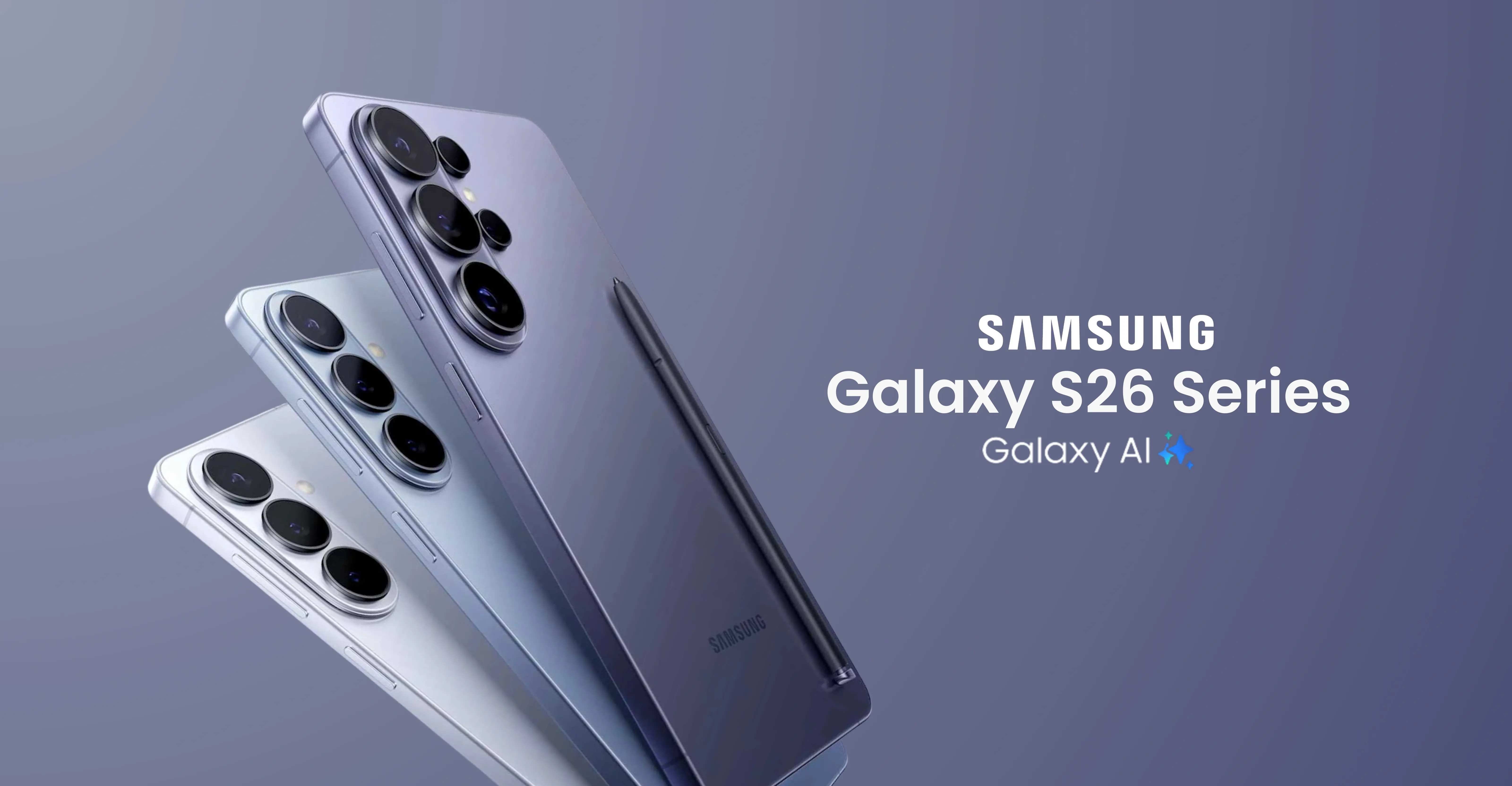
Everything you need to know about Samsung S26 Series
10th March, 2026